What to Do When Your Child Finishes All the Classes in the Block
Finishing the twelve classes of the first block is an achievement. Having watched, however, isn't the same as having learned. Brown, Roediger and McDaniel, in Make It Stick, explain that what best fixes knowledge is trying to recall it and spacing the review over time, not rereading or rewatching.
How to do it
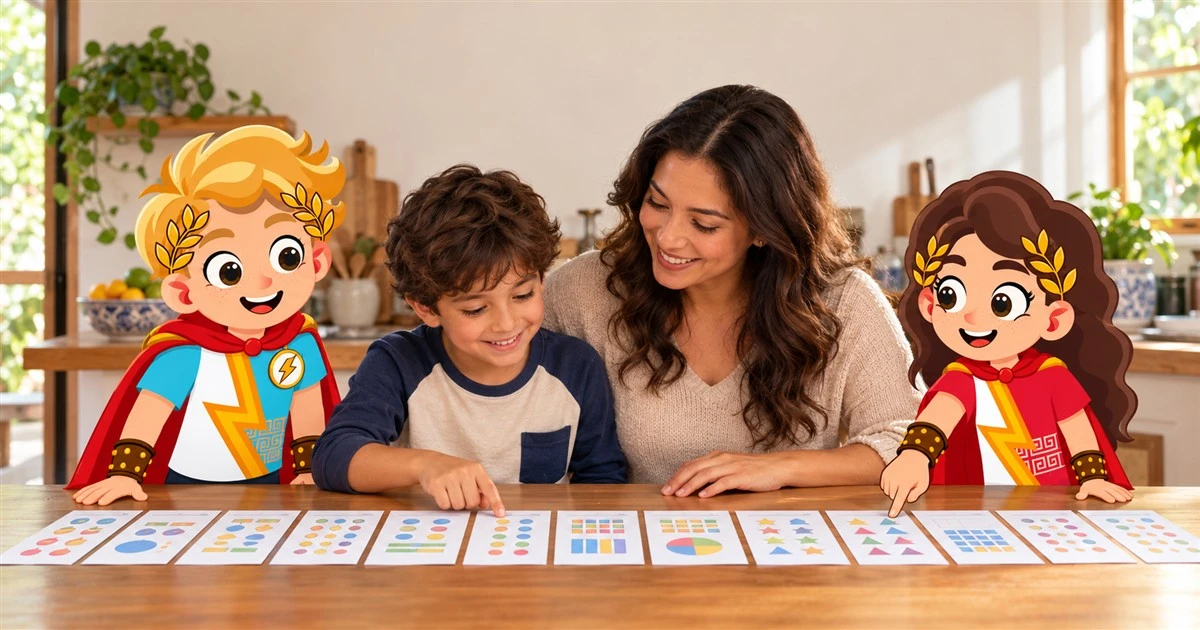
The review week has five moments. On Monday, the sheets go face down and the child recalls each class from memory, even if they get it wrong; the effort of recalling is what teaches. Then they compare with the sheet and with the quiz, and the ideas that were hardest are the ones worth repeating. From Tuesday to Thursday, the child picks three classes to repeat: choosing gives autonomy, according to Daniel Pink in Drive, and repeating a familiar class lets them notice what they missed before. On Friday, the block's three powers, income, debt and risk, are brought to a situation of their own, with the question of where they saw each one this week. On Saturday the child explains a full class to a sibling, a grandparent or you, which is the most demanding test of understanding.
After the week, the sheets that were hardest are repeated in two or three weeks, not the next day. Spaced review is the kind that lasts.
What it's for
For your child, the week turns what they've seen into something they can tell, teach and find in their life. For you, the review replaces the question of what's next with a concrete check of what stuck.
What you'll see over time
In the first review week the child may forget several classes and feel it as a failure. Between one and six months spaced review shows which ideas hold. In the long run what was learned in the block forms a base for the classes that follow.
Signs it's working
You know the review worked when the child recalls a class without looking, when they identify an income or a risk in their life and when they explain a class to someone else.
Understand that income, debt and risk show up in daily life.
Review what was learned with spacing before moving on.
Explain a full class to another person.
"Finishing is not reaching the end, it's having a foundation."
Most common error