Dinner Questions: The Habit of Talking About Money
Talking about money stops being a special topic when it becomes part of daily conversation, like school or work. Ron Lieber, in The Opposite of Spoiled, argues that parents who talk about money naturally raise children who are more confident at deciding. James Clear, in Atomic Habits, explains how to sustain a new habit: attach it to one that already exists. Dinner already exists.
How to do it
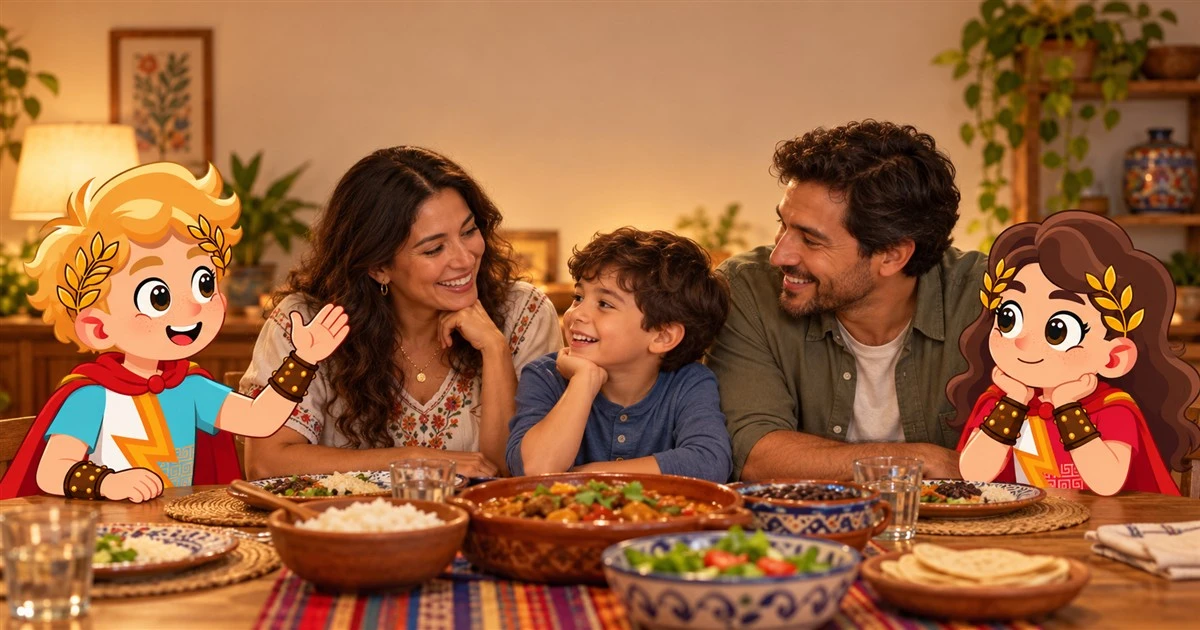
There are five questions, one per week: What did we buy this week that worked for us? What decision did you make that you liked? What would you like to have but are still waiting for? What can we do at home to earn something? What can you choose this week? After the fifth, start over, because the answers change over time.
Four rules make it last. The one who asks answers first, with a decision of their own, even one that didn't go well, because children copy what they see done, according to Bandura. Nobody corrects, because if every answer is corrected nobody wants to talk again. You repeat what you heard: "So you wanted to wait to buy it with more information." Listening well teaches more than opining. And it lasts five minutes, because ending while they still want more is what makes them come back.
With kids ages 4 to 6, it helps to use only questions 1, 3 and 5, with examples they can point to. With ages 7 to 10, add "why?" to each answer.
What it's for
For your child, dinner is a moment where their opinion about money counts and is heard. For you, the habit has a short structure that repeats every week without having to think about what to say.
What you'll see over time
In the first weeks the answers may be short and almost always the same. Between one and six months the child starts asking questions of their own at dinner. In the long run money is a family topic that's talked about normally.
Signs it's working
You know the habit works when the child answers without you correcting, when they repeat a decision of theirs at dinner and when they ask for next week's question to be a different one.
Understand that money is a family topic.
Talk about money at dinner each week.
Express an opinion about a purchase decision.
"In our family, money is also talked about."
Most common error