Money Lessons for Bilingual Kids: How to Mix English and Spanish
A bilingual child can learn money ideas in both languages at once. What matters is that each word is tied to something they already know. Chip and Dan Heath, in Made to Stick, show that concrete things are remembered more than abstract ones: the word "ingreso" attached to helping set the table stays longer than its definition.
How to do it
The words to start with are four pairs. Ingreso and income: money received for doing something. Gasto and spending: what is bought. Ahorro and saving: what is kept for later. Deseo and want, necesidad and need: what we want and what we need.
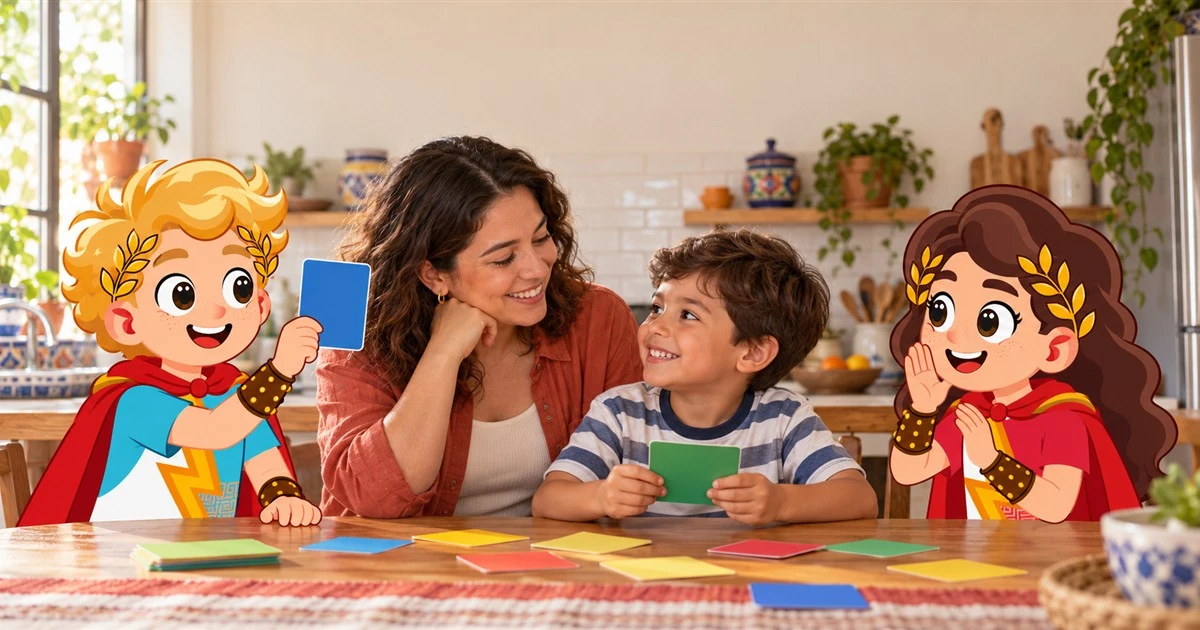
Practice one word a day, in an everyday sentence: "Today I had income: I helped set the table." Then ask how to say it in the other language. James Clear, in Atomic Habits, recommends attaching a new habit to an existing one, and dinner or the ride to school are good anchors. The game is a card with the word in Spanish on one side and in English on the other. The child explains the idea in their own words, in the language they prefer. Two days later, come back to the same word: Brown, Roediger and McDaniel, in Make It Stick, show that recalling a word after an interval fixes it far better.
You don't need to speak both languages perfectly. Mixing them doesn't confuse the child if each word has a clear example; what they learn is the concept.
What it's for
For your child, money becomes a topic in their language and in the other, and each word has a use they can explain. For you, talking about money no longer depends on which language you master better, because the practice is the same in either.
What you'll see over time
In the first weeks the child may answer with a single word. Between one and six months they use the words in sentences of their own and switch languages without being asked. In the long run they tell the concepts apart even when the language changes.
Signs it's working
It's working when they use a money word in a sentence of their own, when they remember a word two days later and when they explain an idea in the language they choose.
Understand a money idea in two languages.
Practice one word a day.
Use a money word in a sentence of their own.
"A money idea is learned in both languages."
Most common error