Teaching a Child to Be an Entrepreneur: A Home Shop, Step by Step
For a child, being an entrepreneur means offering something useful, setting a price and learning from what happens. Eric Ries, in The Lean Startup, describes the entrepreneur's cycle: try something small, measure what happened and adjust. A home shop is that cycle at kid scale.
How to do it
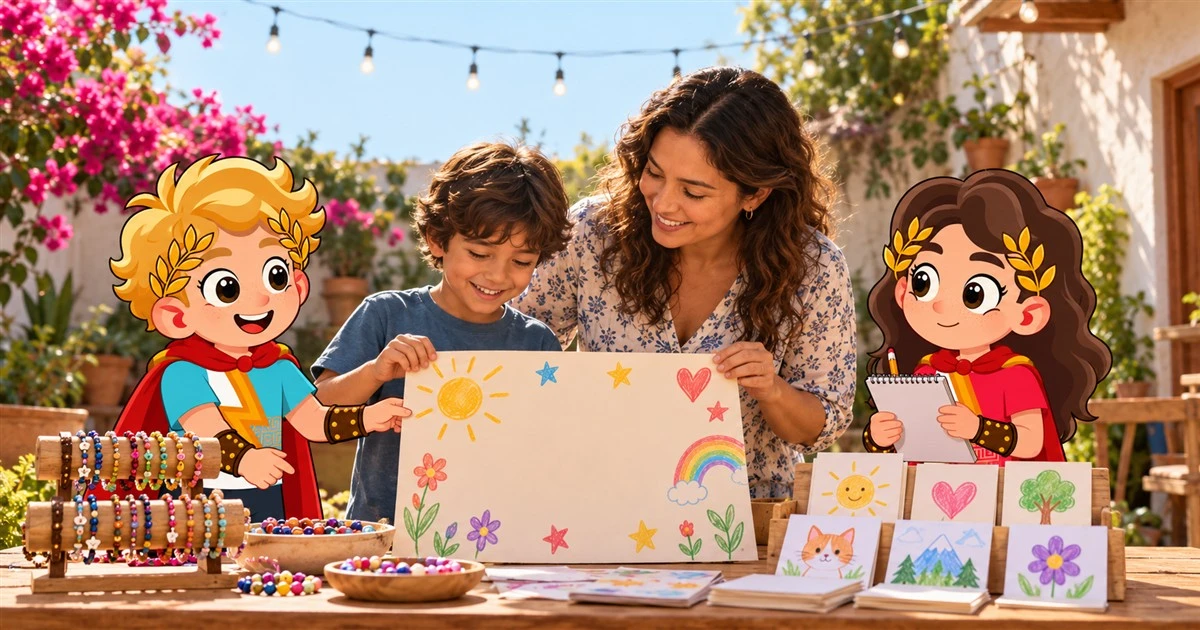
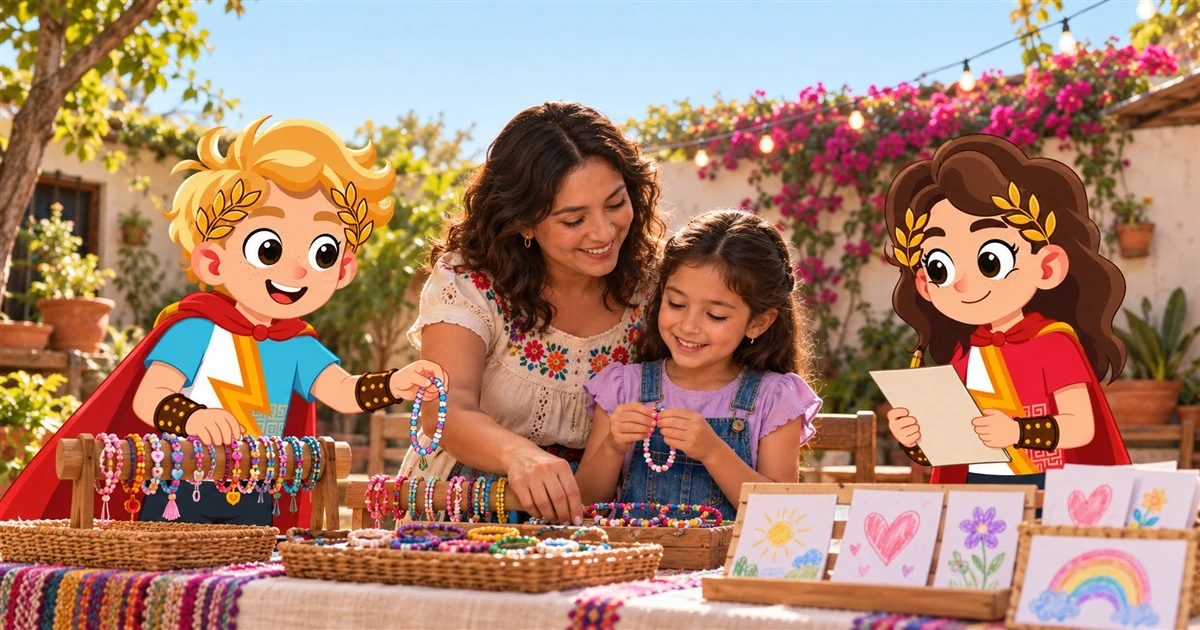
The first step is choosing what to sell: a drawing, a bracelet, lemonade or a service like watering a plant. Ask what they know how to make and what they'd like to offer, and let them choose. Daniel Pink, in Drive, explains that autonomy sustains motivation. The second step is setting a price: ask how much they think it's worth and why. If the price is too high, nobody buys; if it's too low, it doesn't cover the effort or the materials.
The third step is selling and observing. Set up the stand at home, with neighbors or family, and afterward ask what happened: did anyone buy? Why? The fourth step is adjusting. If nothing sold, change the price, the product or the sign, one at a time. Carol Dweck, in Mindset, shows that children who see a failed try as information keep trying. With a notebook they write three numbers: what came in, what it cost and the difference. That difference is what they truly earned.
If they lose money, don't rescue them. Ask what happened and what they'd change, and help them plan the next try.
What it's for
For your child, the stand is the first place where their idea has a real price and gets a response. They feel ownership of the decision, and a try that doesn't sell teaches them something without punishing them. For you, you stop being the one who decides what they can sell and become the one who asks the questions that help them think.
What you'll see over time
In the first weeks the child usually wants to change everything at once; change one thing at a time. Between one and six months they set prices with reasons and review what worked after each sale. In the long run they ask for another sale, another product or a plan to earn more.
Signs it's working
It's working when the child explains their price, when they change one element based on what they observed and when they tell you the difference between what came in and what it cost.
Understand that a try that doesn't sell also teaches.
Review what worked after each sale.
Set a price with reasons.
"The difference between what came in and what it cost is what they truly earned."
Most common error