How to Use the Class Sheet at Family Dinner
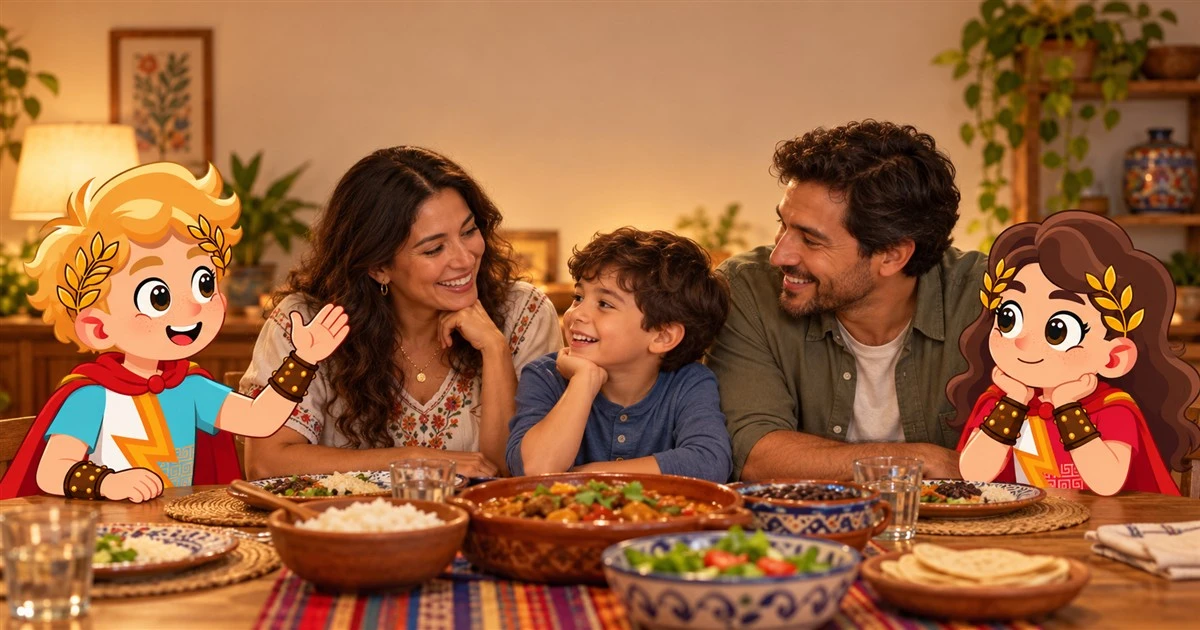
Dinner is a good moment to review the class, because everyone is seated and there's no rush. Ron Lieber, in The Opposite of Spoiled, argues that talking about money out loud and without taboos, from an early age, is part of raising a child who handles it well. The table is where that happens without extra effort.
How to do it
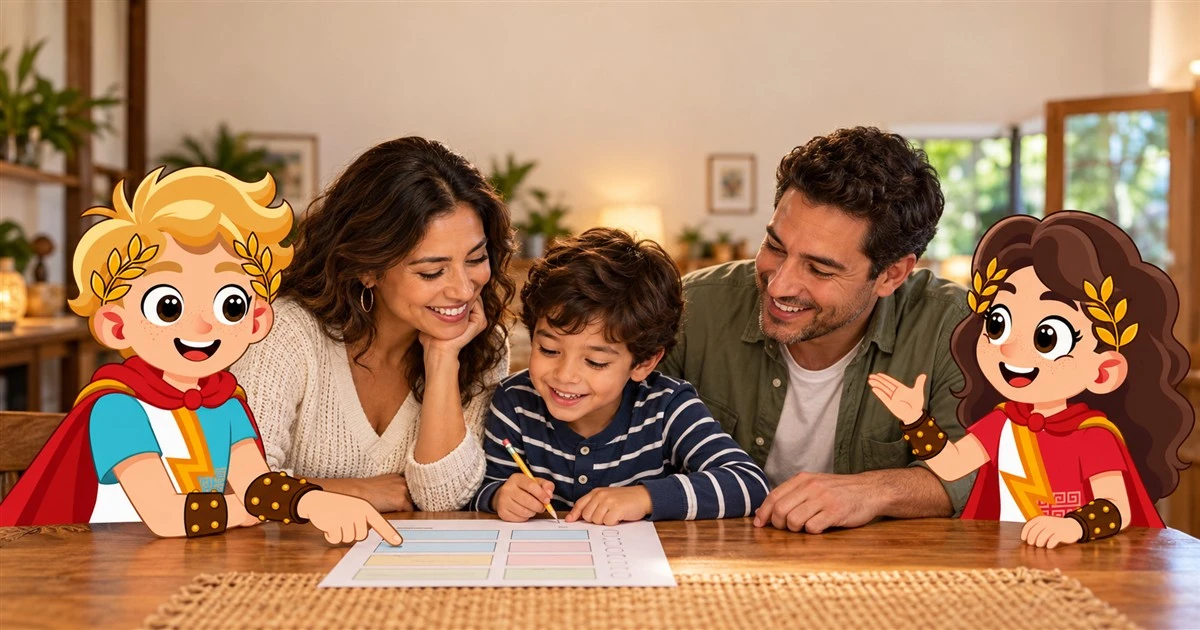
It's four moves of five minutes. You put the sheet in view, or cover it if you want them to answer from memory. You ask what the character decided and why, and the child tells it without looking at the sheet. The others weigh in without correcting: answering from memory, rather than rereading, is what best fixes learning, according to the retrieval practice described by Roediger and Karpicke and summarized in Make It Stick. And you answer too, with a decision of yours from this week, even one that didn't go well, because children copy what they see adults do, as Bandura points out.
The close can be a fixed phrase: "Today we thought before deciding."
If the child doesn't want to talk, lower the question: "Which character did you like best?" With siblings of different ages, the younger one answers first and the older one adds a detail, and neither corrects the other.
What it's for
For your child, dinner is a moment where their answer matters to the whole family. For you, the sheet stops being a duty and becomes a topic for the table.
What you'll see over time
At the first dinners the child may answer in single words. Between one and six months they tell the decision in their own words and wait for your opinion. In the long run dinner includes money as a normal topic, without having to think about it.
Signs it's working
You know dinner works when the child tells the class without looking at the sheet, when siblings talk about what they saw and when the money topic shows up at the table without you bringing it.
Understand that answering from memory fixes learning.
Review the class as a family at dinner.
Explain a decision in front of the family.
"At the table we also think before deciding."
Most common error