Storytime: What I Learned About Money the Hard Way and What I Want for My Kids
I grew up with the idea that money was a grown-up topic and not something you ask about. I learned the hard way: through debt, fear of asking and the guilt of not knowing. Today I want something different for my kids. Morgan Housel (The Psychology of Money) writes that nobody's crazy with money: everyone decides from what they lived. Understanding where your reactions come from is the first step to not passing them on without noticing, and this story can be the starting point for yours.
How to do it: turn your story into a lesson
- Remember a money lesson from your childhood (good or bad) and write it in two sentences.
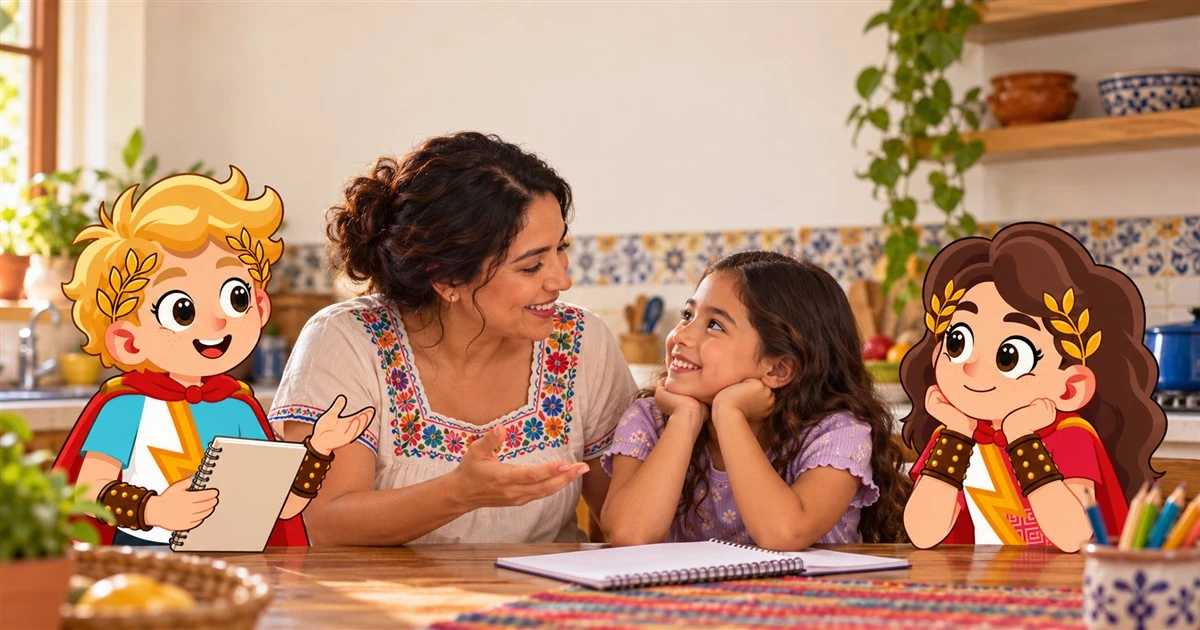
- Tell it to your child in words their size: "When I was little, nobody talked about money, and I didn't know how to ask. That's why I want you to be able to."
- Say one decision of yours from today: "Today I didn't buy this because I'm saving for that."
- Ask: "What decision would you make?"
Do it once a week, no more: two minutes is enough.
What it's for
For your child: they learn that money is talked about, that mistakes are told and that asking for help is part of managing well. They feel accompanied, not examined. For you: talking about what you lived usually eases the shame you carry; putting words to the story takes away its power over today's decisions.
What the research says
Albert Bandura showed that children learn from what they see adults do, including how they handle their mistakes. Ron Lieber (The Opposite of Spoiled) argues for talking with kids about money honestly and at their size, and Carol Dweck (Mindset) shows that seeing mistakes as information sustains effort. Gudmunson and Danes (2011) describe that parents' intent and the quality of the relationship weigh more than the amount of information.
What you'll see over time
- First weeks: they ask you money questions they'd never have asked.
- Three to six months: they tell a mistake of their own without shame and ask for help when they don't know.
- Long term: they'll grow up knowing money can be asked about, a difference you didn't have.
Signs it's working
They ask you questions; they say "I don't know, will you help me?"; and they tell what they bought without hiding it. If you notice silence, don't force it: share another story, theirs or yours, a week later.
Understand that ideas about money are passed on and can be changed.
Talk about money decisions naturally.
Tell an experience and draw a lesson from it.
"Mistakes teach too, if we share them."
Most common error