The Ploutus Lab Gamified Quiz: How It Works
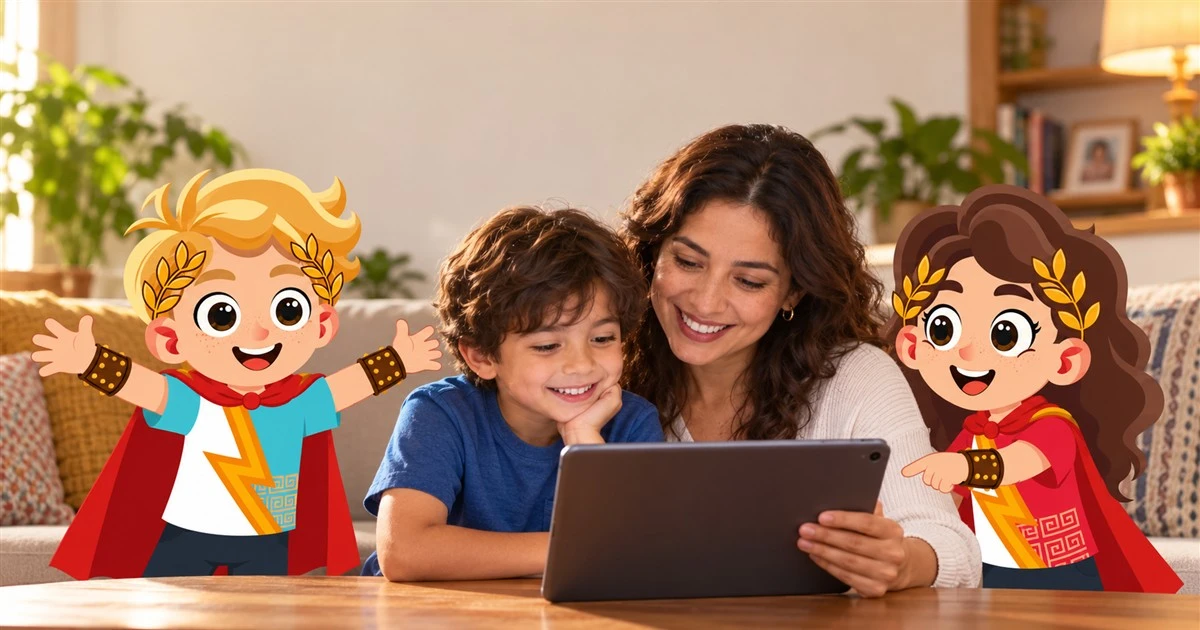
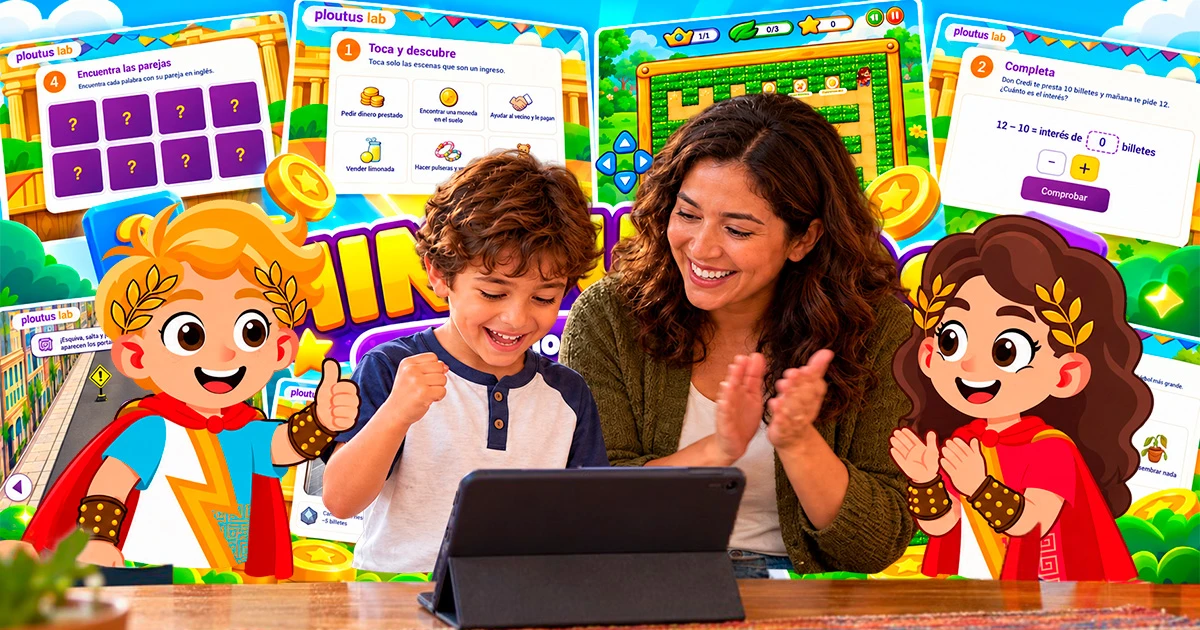
After each class, the gamified quiz reviews what your child saw. It's a minigame: the child answers picture-based questions and moves forward with each correct answer. If they get one wrong, they try again. The game doesn't punish mistakes, it uses them to review the idea. For your child it's a game; for you, a way to see what they're learning.
How to do it
At home, let them play it on their own and then ask: "Which question was hardest?" If they get one wrong, don't correct: ask "what made you think that?" The mistake shows how they think. Carol Dweck, in Mindset, describes that seeing mistakes as information sustains effort, and that can be celebrated.
What it's for
Daniel Pink, in Drive, explains that motivation lasts when there is autonomy and a sense of mastery: moving forward, getting better, clearing a level. The quiz is built on that logic. There are pictures, progress and another try, and no grade. That's why the child lives it as playing and not as an evaluation.
For you, the quiz shows which ideas your child remembered and which need another review. Teresa Amabile and Steven Kramer, in The Progress Principle, describe that seeing progress is among the strongest motivators for people, and that includes the adults who accompany. You no longer depend on asking "what did you learn today?" and getting a "nothing."
What the research says
Roediger and Karpicke showed that trying to recall something, even if you fail, fixes learning more than rereading it. Make It Stick calls it retrieval practice. Each quiz question is a memory rehearsal with little at stake.
What you'll see over time
In the first weeks the child may want to win every time; let them try. Between one and six months they explain the question that was hard and ask to repeat it. In the long run the quiz becomes a review habit without anyone asking.
Signs it's working
It's working when they ask to play the quiz, when they explain the question that was hard and when they tell you an idea from the class without being asked.
Understand that mistakes also teach.
Review the class ideas with a short game.
Remember and explain an idea from the class.
"For the child it's a game; for you, a way to see what they learn."
Most common error