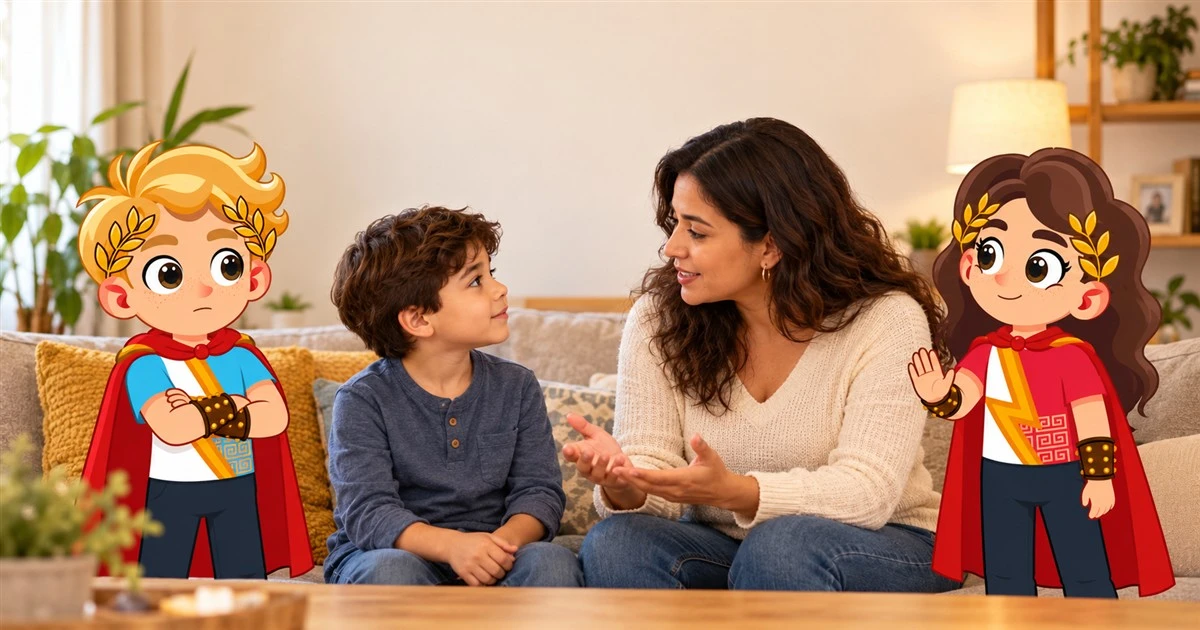
The “No”s Your Children Actually Understand
A “no” without an explanation sounds like a wall. A “no” with a reason sounds like a boundary, and children understand boundaries better than we think. Jane Nelsen (Positive Discipline) sums it up in two words: firm and kind.
How to do it: the three parts of a good “no”
- Say what won't happen: "We're not buying that today."
- Say why, in a short sentence: "We already have one at home."
- Say what can happen: "We write it down for your birthday."
When they keep pushing, repeat the same thing, calmly: "I already said no today. We can talk about something else." And keep the same answer for the same kind of request.
What it's for
For your child: they learn that there are clear limits, that they don't always change and that they can choose within them; that security lowers the pushing. They feel cared for, not rejected. For you: you stop feeling like the villain, because the “no” comes with its reason and its way out; fewer shouts and less guilt.
What the research says
Gerald Patterson showed that what keeps insistence alive is giving in now and then; a consistent “no” puts it out. Daniel Siegel and Tina Payne Bryson (No-Drama Discipline) propose connecting first and redirecting after: acknowledging what they feel before holding the limit. And according to Deci and Ryan, choosing within a frame sustains wellbeing.
What you'll see over time
- First weeks: they push more at first to test whether the limit changes; that's the test.
- One to three months: they accept the “no” with less protest and propose alternatives.
- Long term: they grow up accepting limits without breaking, the base of waiting and saving.
Signs it's working
They repeat your phrase ("not today, we write it down"); they ask "when yes?" instead of yelling; and they calm down sooner. A well-said “no” is also a way of caring.
Understand that clear limits are part of deciding.
Accept an answer without pushing further.
Explain decisions with a short sentence.
"Not today, and this is what we can do."
Most common error