How to Set Up a Learning Space at Home for Your Hero
A fixed spot for the class does more for consistency than any scolding. James Clear, in Atomic Habits, argues that environment weighs more than willpower: what's in plain sight gets done, and what you have to go find gets postponed. Richard Thaler and Cass Sunstein, in Nudge, show that how a place is set up changes the decisions made in it.
How to do it
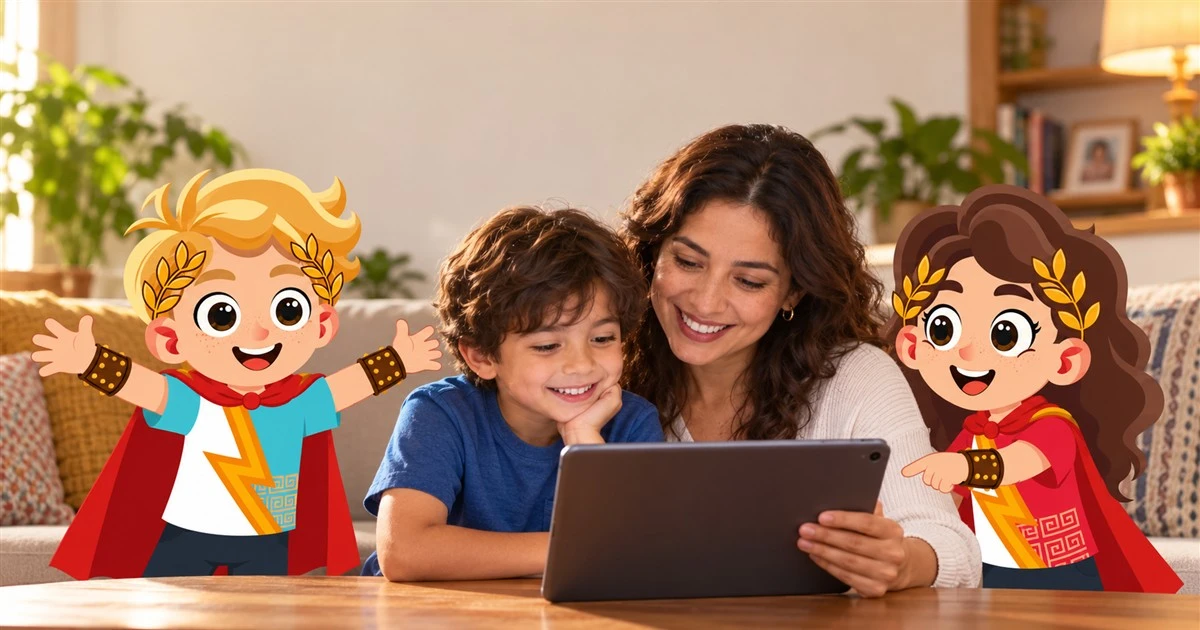
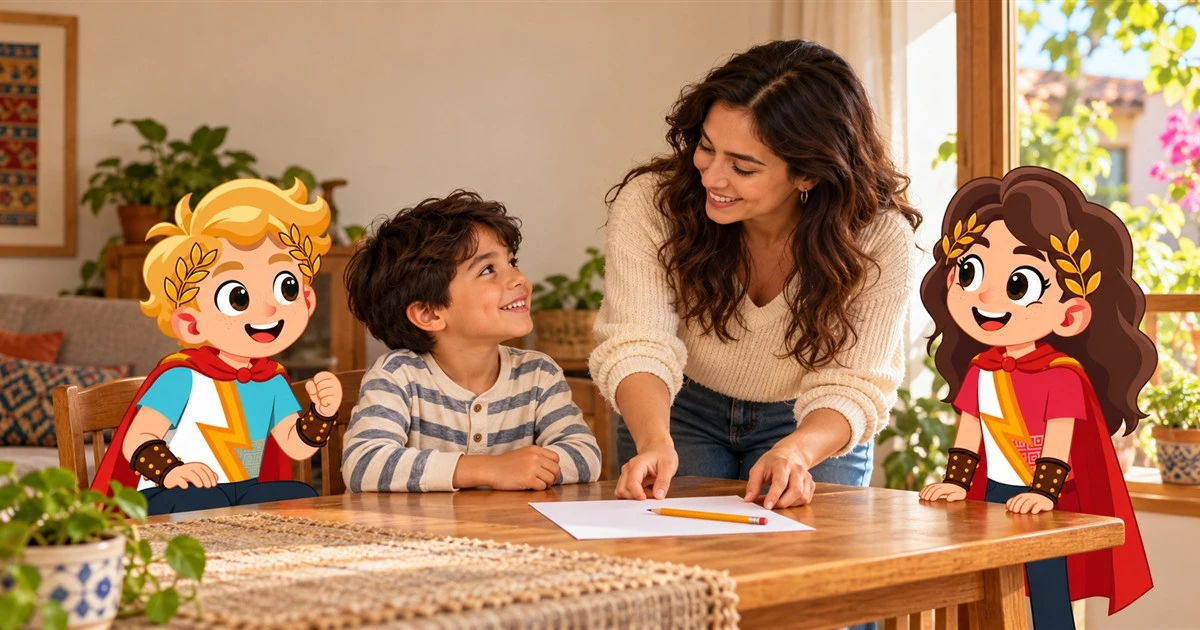
The corner needs four things. Always the same spot, so sitting there already means the class is starting. Good light, natural if possible. A surface to write on, with the sheet and two pencils in view before starting. And a grown-up nearby: the American Academy of Pediatrics, in Media and Young Minds (2016), recommends that adults watch content with young children. Those four minutes of class are worth more with your presence than with any explanation.
You don't need to buy anything. The device you already use is enough. What does matter is removing the competition: the TV on, a sibling's phone, other games open.
If space is small, one end of the table is enough, always the same one. Keeping the sheet and pencils in a folder on a shelf marks the start when you take it out and the end when you put it away.
What it's for
For your child, the place tells them it's time to think. For you, the corner is a decision you make once and not a daily reminder.
What you'll see over time
In the first weeks the place needs you to remember it. Between one and six months the child sits down on their own in the same spot. In the long run the space becomes part of the home, and the class starts with the same posture every day.
Signs it's working
You know the space works when the child sits in the same place without being told, when they have the sheet ready and when there are no screens competing.
Understand that the environment helps decide and sustain a habit.
Have a fixed place and time for learning.
Prepare materials before an activity.
"A fixed place tells your child it's time to think."
Most common error