Is It for 4-Year-Olds? How the Younger Range Works
A 4-year-old can learn money ideas if they're presented at their level. Ploutus Lab has two ranges: ages 4 to 6 and ages 7 to 10. The difference is in how the idea is presented, not in the topic. Berti and Bombi, in The Child's Construction of Economics, describe how young children already build ideas about prices, stores and work, and how those ideas sharpen with age. Starting at 4 means joining something that is already happening.
How to do it
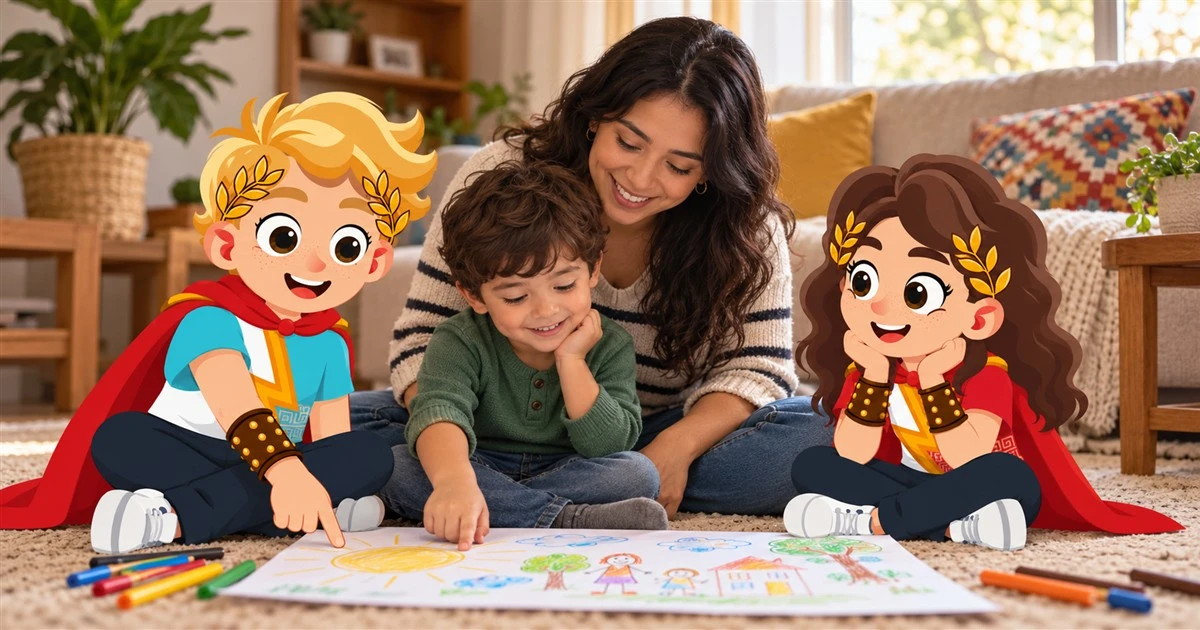
The younger range has short sentences, characters who explain slowly, more visual sheets with large drawings and few words, and home situations: helping, waiting, choosing between two things.
They don't need to read. The characters ask the question out loud and you read the sheet's instruction.
The class lasts about three minutes and the sheet can take ten. If they get distracted, the sheet is split over two days. Two short sessions work better than one long one that ends in tears.
What it's for
For your child, the money idea becomes something they can follow without reading, with images and voices that speak at their level. For you, the class becomes a tool that adapts to a child who can't read yet.
What the research says
Walter Mischel, in The Marshmallow Test, found that the preschoolers who managed to wait were the ones who used strategies, like thinking about something else. The class stories give them a picture of what to do while waiting.
What you'll see over time
In the first weeks your child may get distracted halfway through the class. Between one and six months they respond to the characters' questions and do the sheet with less help. In the long run, when they turn 7, they move to the older range with a base already built.
Signs it's working
It's working when they answer the character before you help, when they ask for the sheet and when they ask a question about what they saw.
Understand that a money idea can be followed without reading.
Practice in short sessions.
Answer simple questions about an everyday situation.
"Two short sessions beat one long one that ends in tears."
Most common error