How to Teach an 8-Year-Old Budgeting With a Simple Activity
An 8-year-old can learn budgeting with a fixed amount, a list of three things and a Friday review. They don't need spreadsheets: they need to choose what goes in and what waits, and see what happened at the end of the week.
How to do it
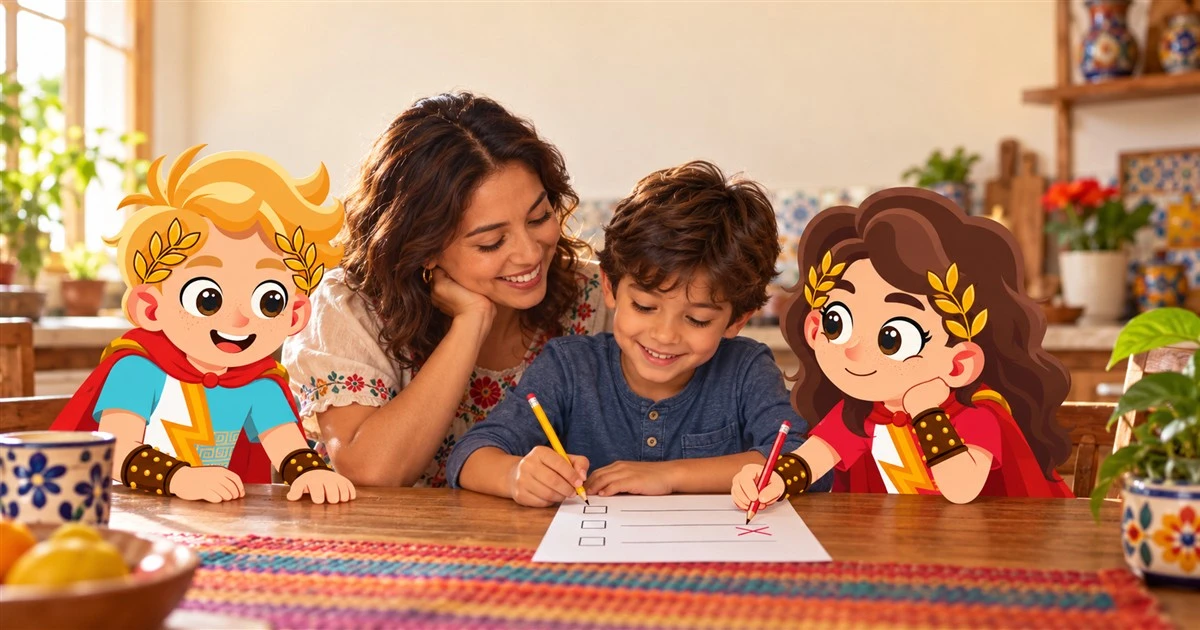
The activity has five steps. On Monday you write the week's amount, for example 6 dollars. The same Monday they write three things they want: a 3-dollar ice cream, 2 dollars of stickers and a 5-dollar book. Then they decide: "With 6 dollars all three don't fit. Which do you pick and which waits?" and mark each as "now" or "later." During the week every purchase is written down and subtracted on the sheet, and they do the math. On Friday you review: "What did you spend, what was left and what would you change next week?" You don't correct Monday's decision, even if you know it will come up short, because Friday is for that.
What it's for
For your child, they discover that saying yes to one thing is saying no to another, and they discover it with their own list. They feel ownership of the decision, and if they slip the cost is small. For you, you stop being the one who says no: the sheet says it. And you see how your child thinks when there's a limit.
Richard Thaler describes mental accounting: we split money into accounts by purpose, and a simple budget turns an abstract amount into decisions with names. Economists call what you give up when you choose opportunity cost, and an 8-year-old can see it in their list. Carol Dweck, in Mindset, describes the mistake as information for next time, not as a judgment about the person.
What you'll see over time
In the first weeks they spend almost everything on Monday or pick the most expensive thing first. Between one and six months they split better and leave something for the end of the week. In the long run they ask to plan two or three weeks for something bigger.
Signs it's working
It's working when they do the subtraction without help, when they pick something for "later" without a fight and when on Friday they propose a change. If they get frustrated, shrink the list to two things or split the week in halves. A budget that can be kept teaches more than an impossible one.
Understand that saying yes to one thing is saying no to another.
Review on Friday what was spent and what was left.
Plan with a fixed amount for one week.
"Friday is for learning from Monday's decision."
Most common error