Saying No in the Checkout Line: How to Do It Without a Fight
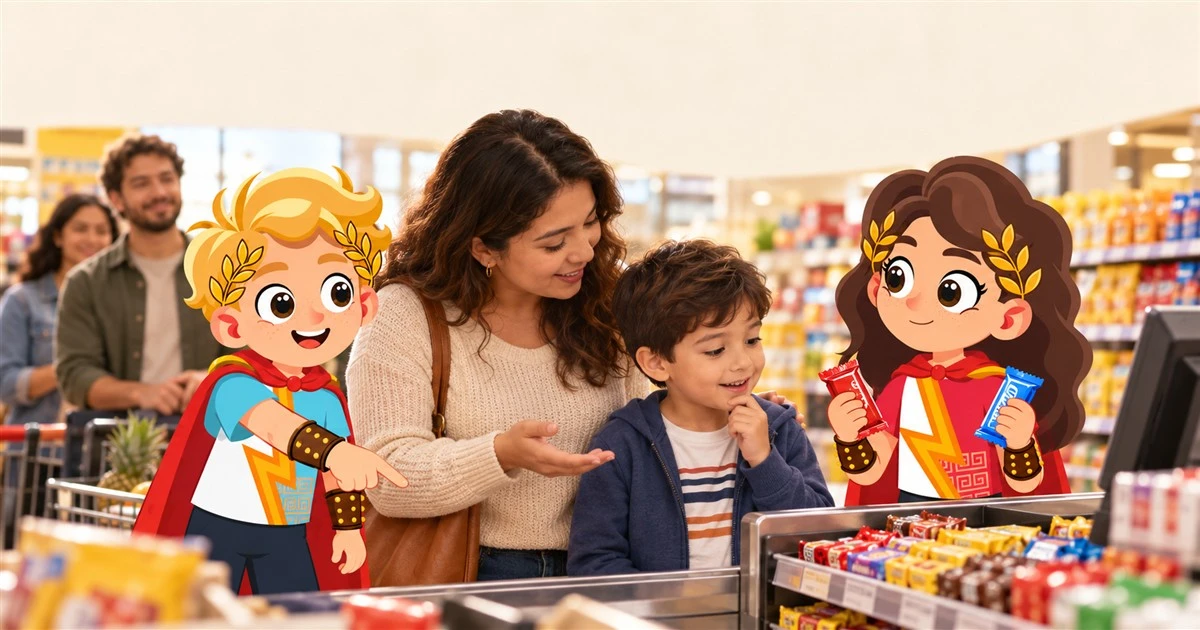
The checkout line is the worst place to argue: people are waiting, your child is staring at the candy and you want to finish fast. Jane Nelsen (Positive Discipline) sums up the tone that works in one line: firm and kind at the same time. A well-said "no" changes the scene, and it's prepared before you arrive.
How to do it: before, during and if they push
Before the register. Tell them what you're buying and what you aren't. If there's something they want, tell them they can choose it next time. James Clear (Atomic Habits) calls this an implementation intention: deciding the rule before the hard moment, not during it.
In the line.
- Say no with a short reason: "Not today, we already have fruit."
- Offer a choice: "Do you want the cookie or the juice?"
- Stay calm and don't explain more than one sentence.
If they keep asking. Repeat the same phrase, without anger: "I already said not today." A no repeated the same way teaches more than an argument.
An agreed signal. If your child already knows the answer is no, agree before going in on a signal, like a touch on the shoulder or a keyword.
What it's for
For your child: they learn that the limit exists and doesn't change with how loud they get; they feel safe because they know what to expect. A choice within the limit gives them control. For you: you pay without a fight, without embarrassment in front of everyone, and leave the store without the feeling of having lost.
What the research says
Albert Bandura showed that children copy what they see: your calm in the line is the lesson. According to Deci and Ryan, choosing within a limit sustains wellbeing. Daniel Kahneman (Thinking, Fast and Slow) explains why deciding the rule beforehand helps: in a tense moment, impulse dominates.
What you'll see over time
- First weeks: the meltdown is shorter, and they repeat your phrase.
- Three to six months: they choose between two options without asking for a third and ask beforehand "today yes or today no?"
- Long term: they grow up knowing a limit isn't rejection, a base for waiting and saving.
Signs it's working
They accept the "no" with less screaming; they pick one of the two options; and on the next visit they ask before asking for something. If the screaming stays the same, check that you keep what you promise ("next time") and that the phrase is always the same.
Understand that a limit doesn't change with how loud someone gets.
Choose between two options within a clear limit.
Announce the purchase before reaching the register.
"Not today, and this is something you can choose."
Most common error